

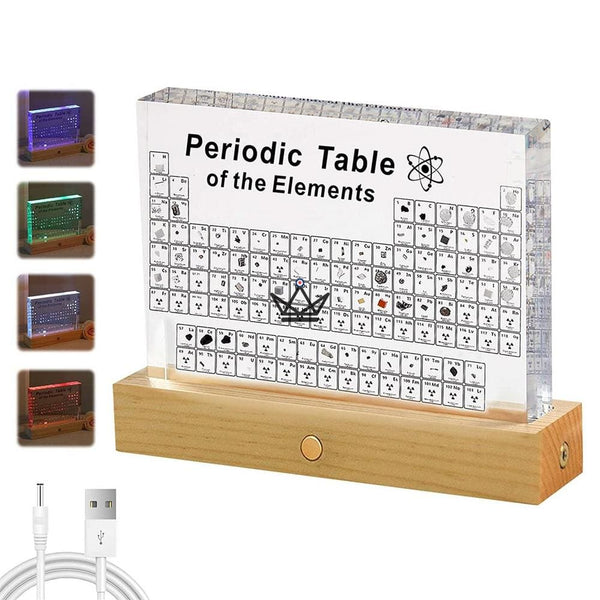
Decorative Periodic Table with Real Elements — Mendeleev
Tax included
In the box
- 1 acrylic resin periodic table with 83 real element samples
- Depending on the version: backlit wooden base (USB or wireless)
Everything you need to know
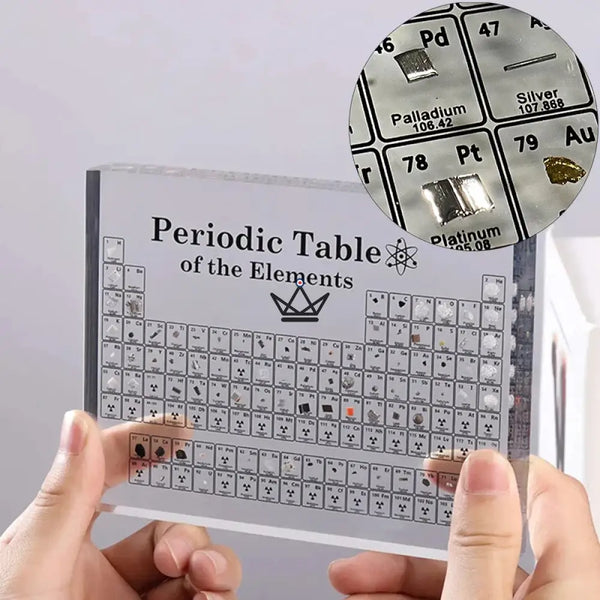
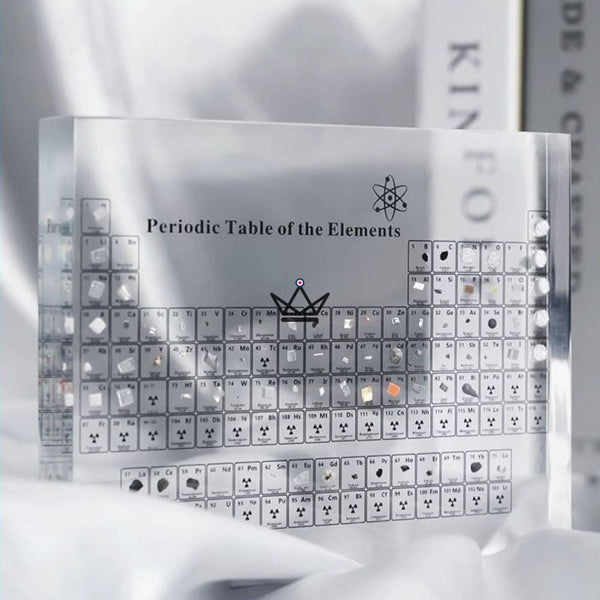
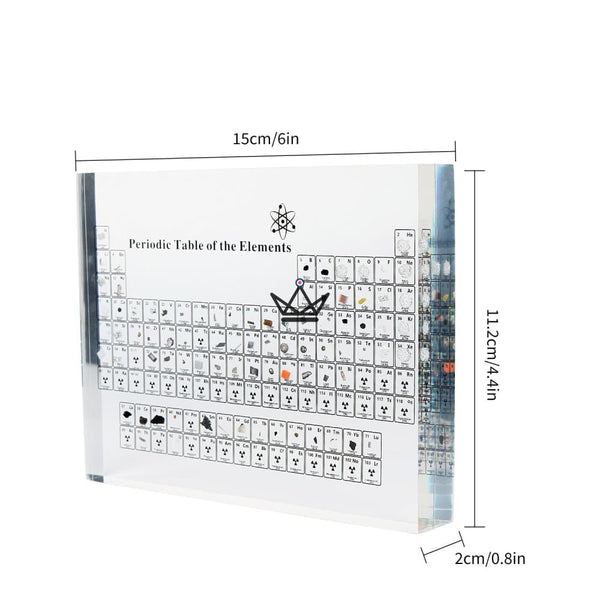
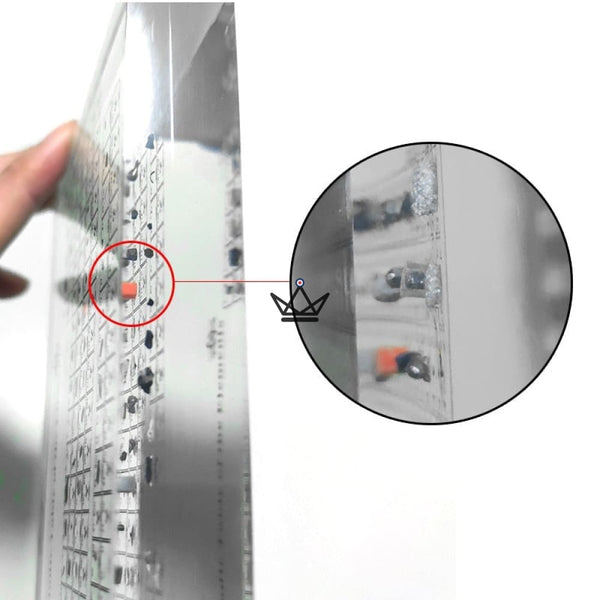
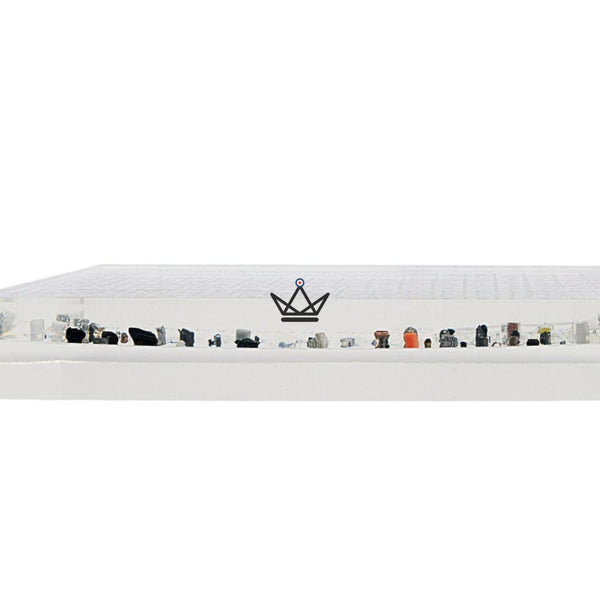
The decorative periodic table is a unique scientific object that transforms chemistry into a displayable work of art. Unlike traditional printed periodic tables, this one contains 83 real samples of chemical elements embedded in high-quality transparent acrylic resin: from lithium to bismuth, including gold, silver, copper, mercury, sulfur, silicon… each cell contains an authentic sample visible to the naked eye. Compact size 15 × 11.5 × 2 cm, ideal for a desk, bookshelf, or display case. Available in three configurations: table alone, or with a backlit wooden base (wired USB or wireless) that visually enhances the elements. An exceptional gift for chemistry students, science teachers, engineers, collectors of scientific objects, or any contemporary pop science enthusiast. 83 Real Elements Not Representations
3 configurations to choose from
Advantages of the periodic table
Which chemical elements are represented?
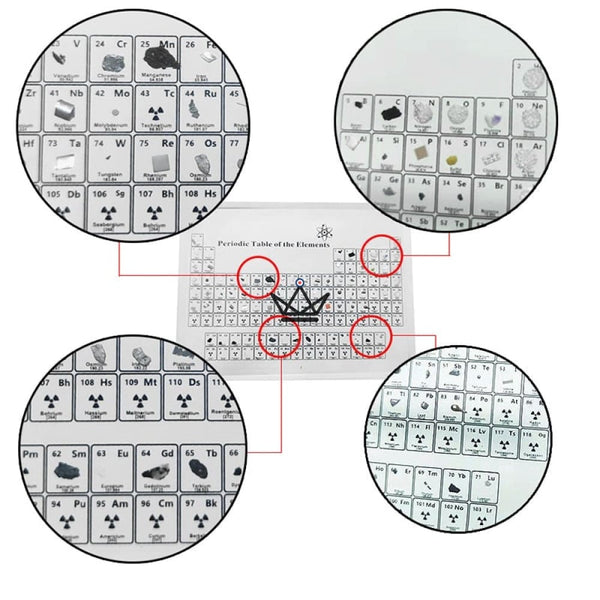
Mendeleev's periodic table currently contains 118 elements, but not all of them can be enclosed in a living room acrylic resin: elements that are gaseous at room temperature (hydrogen, oxygen, nitrogen, fluorine, chlorine, noble gases like helium or neon) cannot be presented in solid form, and radioactive elements (uranium, plutonium, radium, francium...) are excluded for obvious safety reasons.
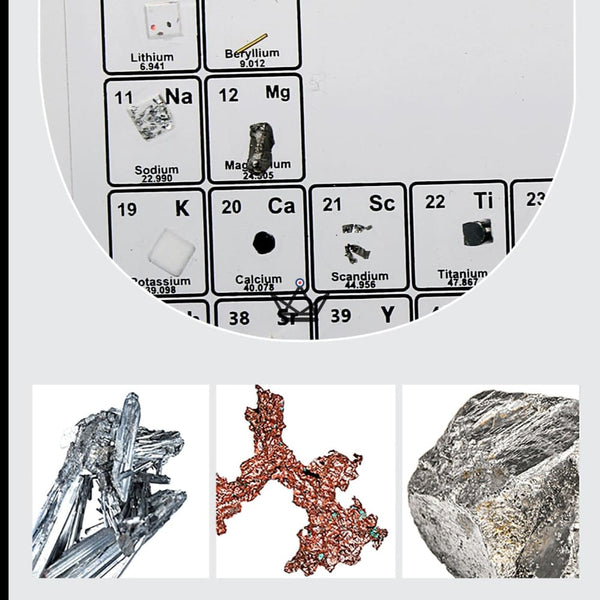
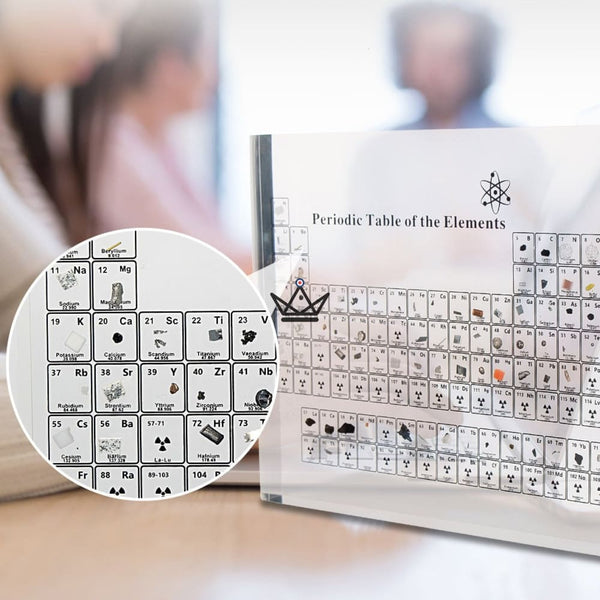
The remaining 83 stable solid elements cover the vast majority of accessible and familiar elements: all common metals (iron, copper, silver, gold, platinum, mercury, lead, zinc, tin, aluminum...), precious metals and rare earths (palladium, iridium, neodymium, cerium...), metalloids (silicon, germanium, antimony, tellurium), and non-metallic solids (graphite carbon, sulfur, phosphorus, selenium, iodine). Each cell of the table contains a visible sample of the corresponding element — not an image, not a representation, but the element itself.
Categories of elements represented
Highlighting tip: the pack with a lighted base (USB or wireless) spectacularly enhances the elements by backlighting them from below. The visual effect is particularly striking in a dark room or with subdued lighting: each sample seems to float in the resin, individually illuminated. Ideal for a studio ambiance desk, a cozy library, or a collection display case in a living room. The wireless pack is particularly practical for mobile presentations (courses, lectures, travel) as it does not require a USB cable nearby. For a premium gift, the wireless pack offers the best usage flexibility.
Maintenance: no special maintenance required. The table is designed for long-term display. Occasionally wipe the surface of the acrylic resin with a soft, dry cloth or slightly damp cloth to remove dust. Avoid harsh chemicals (alcohol, solvents) that could dull the resin. For the wooden base, a dry cloth is sufficient; wood wax can be applied occasionally to preserve the wood's appearance. Avoid prolonged direct sunlight exposure which could eventually yellow the resin.
Elements excluded for safety reasons: gaseous elements (hydrogen, oxygen, nitrogen, noble gases like helium, neon, argon) and radioactive elements (uranium, plutonium, radium, francium, technetium...) are not included. The 83 elements represented are all stable and safe solids to handle. For the most reactive elements (alkali metals like sodium or potassium), specific packaging in a sealed ampoule within the resin ensures their long-term stability.
Technical specifications
| Product type | Decorative periodic table with real elements |
| Main material | High-quality transparent acrylic resin |
| Base | Natural wood (depending on pack) |
| Dimensions | 15 × 11.5 × 2 cm |
| Number of elements included | 83 real samples of chemical elements |
| Excluded elements | Gaseous (H, O, N, noble gases) and radioactive (U, Pu, Ra...) |
| Available configurations | Solo / USB Base / Wireless Base |
| Backlighting | Wired USB or wireless depending on pack |
| Usage | Decoration, education, scientific collection |
| Audience | Students, teachers, engineers, science enthusiasts |
| Maintenance | Soft cloth, avoid solvents and prolonged direct sunlight |
The ultimate scientific decorative object
The decorative periodic table is an original and memorable gift that radically deviates from classic presents. It combines aesthetic elegance (crystalline resin, wooden base, sparkling elements), educational dimension (concrete support for learning chemistry), and unique character (few people own one, guaranteed "wow" effect on visitors). Ideal for a chemistry or engineering student (back-to-school gift, graduation gift), science teacher (end-of-year thank you gift), Father's Day or Mother's Day for a scientific parent, major birthday, Christmas, or professional promotion gift for an engineer, doctor, or researcher. Particularly suitable for recipients who are pop science enthusiasts, collectors of scientific objects, or simply lovers of beautiful, intelligent objects. The pack with a backlit base maximizes the visual impact and perceived value of the gift.
